
E1 Media
- 香港总商会会员编号 :
- HKE0274
E1 Media
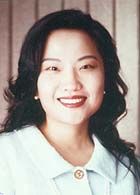
When Dr. Lily Chiang (right) dropped by her old university in 1995, little did she expect that the visit would yield a great business idea, and that she would meet the man who would one day become her husband.
"I was giving a keynote speech in Miami, Florida, for a U.S. company, and -- coming back to Hong Kong, you have to pass by the West Coast -- I dropped by LA and visited my old school USC [University of Southern California]," she said.
She was warmly welcomed as the first student from Asia to be given USC's outstanding alumni award, and introduced to two persons. One was 1994 Nobel Laureate in Chemistry Professor George Olah.
"The other person [Dr Gino Yu] is now my husband. He was in charge of the Multimedia Department there. For me, five years ago, multimedia was a very new field and that meeting really opened my eyes about multimedia and the Internet," she said.
Professor Yu, who now heads Hong Kong Polytechnic University's Multimedia Innovation Centre, gave her a lecture and a tour of the university's multimedia lab, and the two chatted for a while about the applications for multimedia and the Internet, she said.
"The potential of multimedia fascinated me. In the past, if you couldn't read or write you couldn't really communicate, even if you had a computer. But with multimedia you can actually reach a much wider population or audience base with images, audio, video or whatever. Using a much wider range of formats you can reach global audiences even without knowing how to read or write," she said.
The chance meeting got her thinking about how she could use multimedia and the Internet in her businesses, and in 1996 she built a Web site for Chen Hsong Holdings Limited, of which she is executive director.
Then, in 1997 the Asian financial crisis hit Hong Kong. Unemployment rocketed to record levels and young school leavers at the time seemed to have few prospects.
"So I thought well, the Internet is something that is very good for young people; you need a lot of innovation and also creativity. So why don't I provide an opportunity for the young, fresh graduates? So that's how I came up with the idea for E1. Our motto is 'fresh ideas by fresh graduates'," she said.
She started talking to professors and students at local schools to see if there was any interest in starting up a business. The response was strong and after short-listing a few promising ideas, she decided upon one and launched E1 Media Technology Limited.
Since its establishment in 1997, E1 has grown into a multi-million dollar company with financial backing from some of Asia's leading investors.
It provides start-up companies with total solutions from development strategies, to management support, to business connections, and financial support. But Dr Chiang stresses that E1 is not an incubator.
"We call those baby companies embryos. We don't call them incubatees because we think incubators just provide financial support, office space and a little bit in supporting management. But what we provide is full solution support, from business model to technology, to market, everything," she said.
It currently has six embryos which it is nurturing. Combined, these promising companies provide total solutions in three core areas -- broadband, applications and core R&D -- which are all intertwined.
The broadband aspect of E1's business involves mainly multimedia and digital entertainment. But the company is not a content provider. Instead, it is focusing its efforts on developing the next generation of content applications.
"You cannot just look at video on demand or downloading a movie. You have to look at how you can develop the next generation of content application technology. Right now everything is 2D. I think the next generation of the Internet will shift from 2D, to being 3D navigated. That is going to present many exciting innovations," she said.
Coupled with state-of-the-art application technologies the company is developing, Dr Chiang said we will soon be seeing completely new applications for technology.
Despite a slowdown in technology and dot-com stocks, Dr Chiang said she feels the potential and the market for IT companies to succeed is still there.
"People were too crazy about the Internet and so they created a bubble," she said. "Now that they have started cooling off, investors will start looking for really good businesses. So the company with good technology, a good business model, and a good, solid foundation will be able to survive. Those people with just two pages, an idea and are saying, 'my company is worth a hundred million dollars,' definitely won't be able to survive."
