
Investing in Service
- 香港總商會會員編號 :
- HKG0274
Investing in Service
If you dream of working the day away in vibrant Central, and spending your evenings enjoying the vivacious nightlife of Causeway Bay, Given Co. Ltd. can help your dream come true.
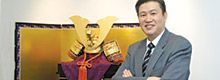
"The day starts here," said Samson Leung, Managing Director of Given, pointing to a picture of the company's serviced Worldwide Executive Centre in Central. "And the day ends here," he smiled, pointing at the Causeway Corner serviced apartments.
But Given isn't simply a company cashing in on the recent trend of serviced offices and apartments. Its story dates back to the 1980s, when Alex Yasumoto, a successful Japanese businessman, visited Hong Kong and found the territory an exciting place for real estate investment. He began to invest in prime office buildings in the Central district and, hence, Given was born.
"At that time, there were not so many modern office buildings in Central as there are today, so demand was high," said Mr Leung.
Business boomed, but the Asian Financial Crisis slammed the brakes on growth as companies downsized and some moved out of Central to take advantage of cheaper rents elsewhere in the territory. Consequently, the company was left with high vacancy rates, management fees and taxes.
"1998 was the turning point and we began to rethink our investment strategy," Mr Leung said. "Instead of putting all of our eggs in the office basket, we had to diversify our investments."
This resulted in the purchase of an old hotel in Causeway Bay, which the company transformed into serviced apartments called Causeway Corner. Mr Yasumoto and Mr Leung designed the interior decoration themselves to make the apartments feel like home. "We simply asked ourselves: what do we want to see when we go home? And then designed the apartments based on our answers."
Lacking serviced apartment management experience, Given hired a hotel consultant to tailor and standardize every aspect of the apartments. However, during the first five months the occupancy rate for the new apartments was less than 10%. "It was just after SARS and the economy was stagnant," Mr Leung said. "So I began to visit nearby property agencies one by one, trying to promote our apartments through them."
Gradually, the economy began to recover and the occupancy rate increased to 70% after two years of operation. "But we were not satisfied and began to wonder if we were heading in the right direction," Mr Yeung said. "Mr Yasumoto and I had different views. He wanted to target local people, while I suggested targeting Japanese expats. I thought Japanese guests would feel at home as it's a Japanese-owned apartment complex; while local people don't tend to stay long and sometimes big families living there are hard to manage."
It turned out that Mr Leung's instinct was right, as up to 70% of tenants are now Japanese. Moderate prices and flexible terms of lease have pushed up the occupation rate to 97%.
Mr Leung believes that with the transient nature of expatriates in Hong Kong and changing lifestyles among local people, there is still huge demand for serviced apartments.
"We purchased the premises at the right time, so we don't have loan pressure, which allows us to focus on service," Mr Leung said. "Also, we have just started plans to renovate and enhance the apartments."
Time to expand?
With a full house, and five years' management experience, Mr Leung said Given intends to invest more in serviced apartments, but the buoyant property market means now is not the right time to invest.
Instead, Given has just refurbished its 30 offices on the 10th floor of World Wide House. "The philosophy is the same as our serviced apartments: right location, right target customer and best service," Mr Leung said. "And we always look for long-term cooperation, as Mr Yasumoto always tells me never to squeeze the customers."
Mr Leung said he has learned a lot from working for Mr Yasumoto, not only with regards to investment and management, but also about the need to give back to society. Mr Yasumoto, who has donated $200 million to the Chinese University of Hong Kong for student exchange programs, said he wants to spend his money on Hong Kong because this is where he makes his money, explained Mr Leung.
