
Art & Antique International Fair Ltd 國際藝展有限公司
- HKGCC Membership No. :
- HKA0746
Art Asia
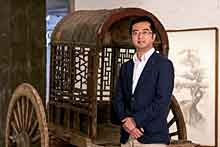
“The fine art and antiques sector is very small in Hong Kong,” lamented Andy Hei, a second-generation fine Chinese antique furniture dealer. When he entered the industry in the 1980s, there were about a dozen top antique furniture dealers in Hong Kong. Today, there are just three or four, because important antique furniture is harder to come by in the market, particularly Huang Huali and Zitan furniture from the Ming and Qing dynasties.
Changing landscape
“In October 1987, the Stock Exchange of Hong Kong was closed for four days due to the global stock market crash. Like so many companies at that time, my father faced many difficulties in the business and had to borrow money from the bank and pay over 10% interest. The crisis wiped out some antique furniture dealers, but we managed to survive,” Hei recalled.
Some dealers left Hong Kong before its historic 1997 handover to Chinese rule. This, coupled with the Asian Financial Crisis in 1997-98, drastically changed the landscape of the local fine art and antiques industry – both in terms of customer base and market preferences.
“Before 2000, most of our customers were from the U.S., followed by Europe. After that, we saw demand shift from America to Southeast Asia – and Mainland China in particular. The trend accelerated after SARS. Today, 80% percent of our customers are from the Mainland,” he said.
Propelling the growth of the China market is the ever-growing demand for Chinese antiques and artwork. “The affluent Chinese are eager to repatriate Chinese antiques and artwork being snapped up overseas,” he said.
However, China’s new generation also favours Western artwork. “With their deep pockets, the youth is an emerging buying force. They desire fine art and antiques that suit their tastes – and preferably make good investments,” he added.
The returns on rare Chinese works of art are exceptionally high. For instance, the selling price for a pair of fine Huanghuali yoke-back armchairs has risen tenfold in the past decade.
“With robust demand and a shrinking supply, the price of exceptionally rare pieces has skyrocketed, particularly in the past four years,” he explained.
Art exhibition
Riding on the boom in the fine art and antiques industry in Asia, Hei in 2006 organized the first annual Hong Kong International Asian Antiques and Arts Fair, which was renamed Fine Art Asia in 2010.
“In the first year, there were about a dozen leading local and international exhibitors,” he said.
“With limited resources, we started the fair small but made sure the quality was high. In the beginning, the exhibition was held at the China Resources Building in Wanchai. The location is very accessible and close to business hubs and entertainment hot spots,” he said.
In 2008, the exhibition was relocated to the Hong Kong Convention and Exhibition Centre (HKCEC). “We thought it would take us five years before we could have the fair organized at the HKCEC, so we were happy about getting in,” he said.
Since the inception of the exhibition, the fair organizer, Art & Antique International Fair Ltd, has worked closely with the Department of Fine Arts of the Chinese University of Hong Kong to help nurture the future generation of art practitioners and professionals in Hong Kong.
Hei said the fair has grown by an average of 10% per annum since 2008, in terms of the exhibition size and the number of exhibitors and visitors. The rise was partly fuelled by an increase in international exhibitors participating in the fair.
“With the dark clouds hovering over the U.S. market, many Western art dealers looked outward for business opportunities. Hence Fine Art Asia acts as a bridge for international galleries who wish to introduce their artists and artworks to Asia. In 2009-10, the fair boasted an impressive growth of Western art,” he said.
Now hosting its 8th exhibition, Hei said Fine Art Asia has the strongest presentation of antiques and fine art this year from over 100 local and international galleries.
He expects the fair to draw 20,000 visitors from Asia and around the world. “In 2006, half of the visitors were from Mainland China, and those buyers have continued to grow to account for about two-thirds of total visitors,” Hei said. He added that many important artworks have been snapped up by buyers from Hong Kong, Taiwan and other Asian markets in the past two years.
