
Manful Beaded Fashion Limited
- HKGCC Membership No. :
- HKM0219
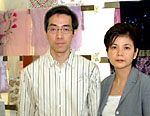
Manful Beaded Fashion Limited
Switching careers is never easy. For Johnny and Margaret Tiong, their decision to enter the fashion trade after a successful career in the insurance industry has proven to be a wise move, but it hasn't been all plain sailing.
In 1991, Margaret's father asked if she would be interested in taking over the family business, Manful Beaded Fashion, when he emigrated.
The couple jumped at the opportunity, but the thrill of being their own boss didn't last long.
"Doing business is, of course, much harder than just being an employee," Johnny said. "And being husband and wife, we could never relax because we would always bring our work home."
With the support of their family and determination to reach a mutually desired goal of making the business succeed, they soon managed the art of juggling business and family life.
Established in Hong Kong in 1962, the company has managed to carve out a lucrative niche for itself manufacturing and exporting beaded, embroidered and crocheted garments and accessories.
Manful was also one of the first Hong Kong? manufacturers to relocate production to the Mainland in the late 1970s, with China's opening-door policy, where it set up a production base in Shantou, Guangdong.
Johnny estimates there are less than 100 firms in Hong Kong involved in the very labour-intensive field, despite it being a growing industry.
In recent years, Manful? exports to the U.K. have grown tremendously to become its largest market, accounting for 60 to 70 per cent of it total sales. Their customers are mainly large chain stores selling middle- to high-end fashion wear.
Although the business is specialised, Margaret puts its growth down to constantly looking to provide its customers with a more diverse range of products.
"We strive to expand our product range to include patch and cut works, and also branch out into home products like sachets and cushions," she said.
"We also need to keep abreast of worldwide fashion trends, understand clients?needs and deliver what they want at the best quality and price," Johnny added.
Their ability to maintain a strong base of workers in terms of quality, capacity and flexibility has also been key to their success. Workers at its Shantou plant concentrate on pre- and post-production stages, while all handwork is done by a large pool of home-workers in the province, which is renowned in the Mainland for its quality handicrafts. This provides great flexibility, because the number of workers can be adjusted from several hundred to several thousand, depending on demand.
Challenging times The labour intensive manner in which their products are made has created challenges for Johnny and Margaret in a world that is leaning increasingly towards just-in-time delivery.
To combat this, and to limit the impact of rising labour costs in the Mainland, the two are adopting a more flexible and advanced approach towards the manufacturing of their products. The partners are investing in machinery capable of doing work traditionally done by hand, as well as strengthening workers?training and updating their own knowledge and skills.
They have also had to face competition from their own customers who are so price sensitive that they have tried to find workers themselves in the Mainland, Johnny said.
Language barriers, cultural differences and insufficient knowledge of China? business environment, thwarted their attempts and they returned to Manful, but such experiences are reminders that the company cannot become com
placent, he said.
It also shows that Hong Kong? middleman role between China and the rest of the world will be maintained, even after its entry to the World Trade Organisation, predicts Johnny, because Hong Kong entrepreneurs?management and marketing expertise is second to none. He also predicts a bright future for his industry as China? quota system for textile and clothing will be abolished in 2005.
